Octopus Agile gets described as the cheapest tariff in the UK. It isn't. It's the most variable. That's not the same thing.
What Agile actually is
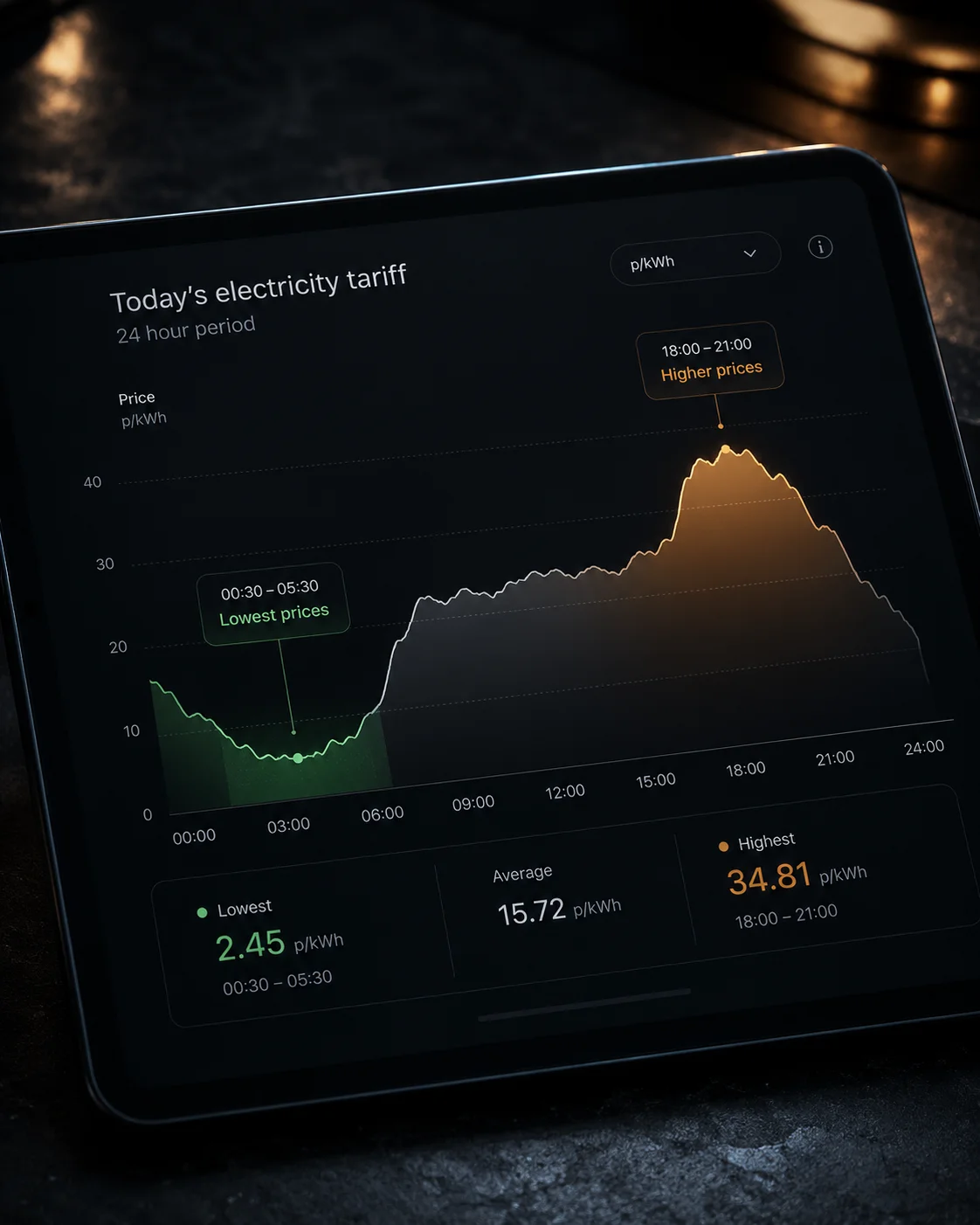
Agile gives you half-hourly pricing based on the wholesale market. Overnight: 3–10p/kWh. Peak: 30–50p/kWh. Same home. Same day. Completely different cost.
A typical household
Most households use energy in the evening — cooking around 6–8pm, heating at similar times, charging EVs when they get home. That's exactly when Agile is most expensive.
Who Agile works for
Agile works if your home can respond. You need flexible demand (EV charging, battery storage, heat scheduling), genuine automation, and enough usage to move the needle. Small homes without shiftable load don't benefit much.
Pricing and demand patterns shift daily. Fixed schedules rarely capture the highest-value windows.
"I'll just avoid peak hours"
This sounds simple. In practice, it fails — because prices change daily, peak windows shift, and cheap periods aren't fixed. You're not avoiding peak. You're guessing.
What actually happens
Most Agile homes avoid peak sometimes and miss it other times. They shift some load, leave a lot unchanged. The result isn't a big loss — it's a steady leak.
£1–£3 per day. £500–£1,500 per year. Not a disaster in one moment — just consistently suboptimal.
Who should NOT use Agile
Agile is a bad fit if you don't automate, use most energy in the evening, or want predictable bills.
The real question
Not "Is Agile cheap?" but "Can your home actually respond to it properly?"
If the answer is no, Agile becomes a liability — not an asset.
The takeaway
Agile isn't a tariff. It's a system. Without coordination, it doesn't work.
Fix it with Aveum
Aveum coordinates timing across your battery, EV charger, heat pump, and tariff signals so your home runs in the cheapest and highest-value windows.
Get early access