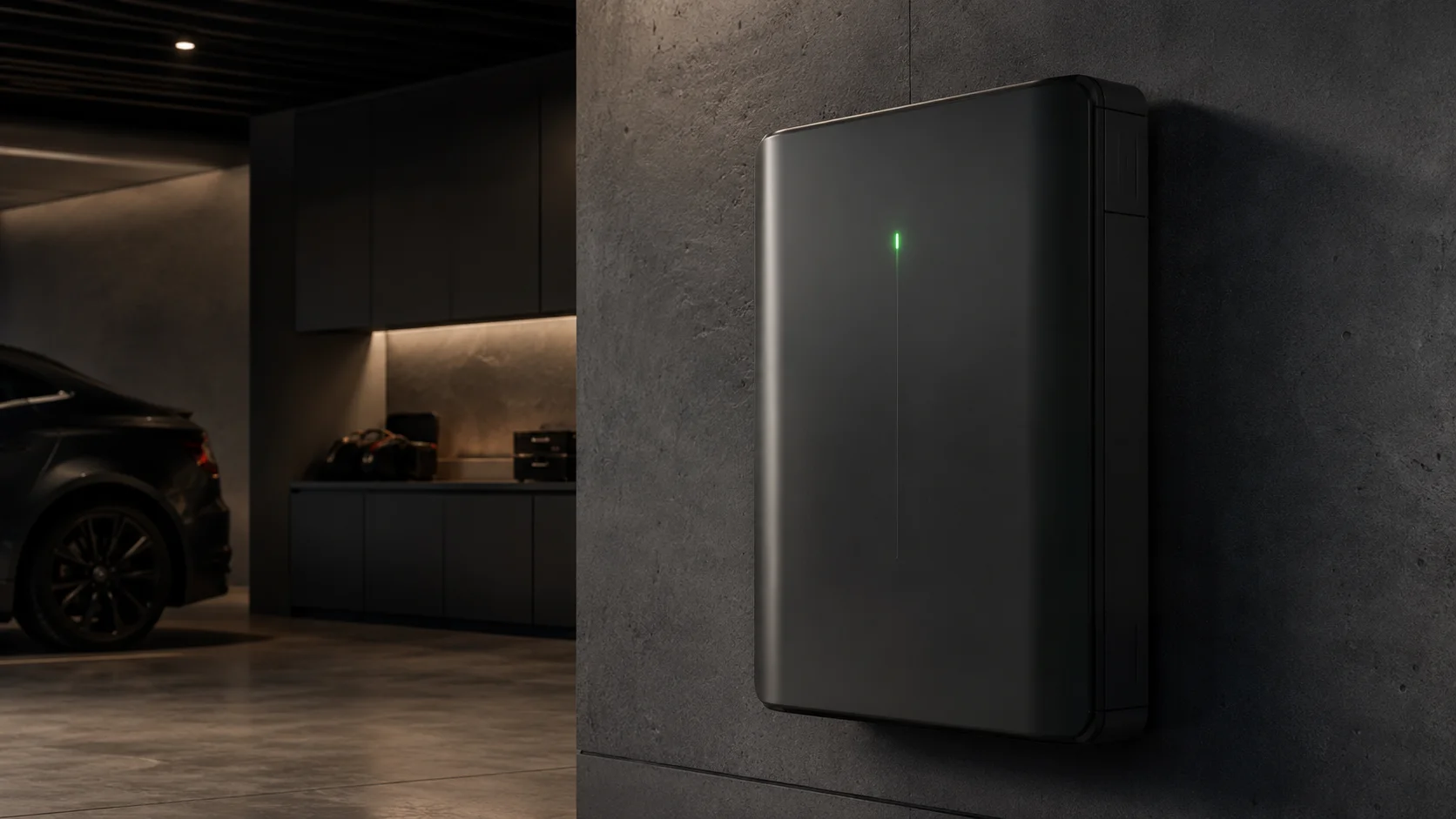
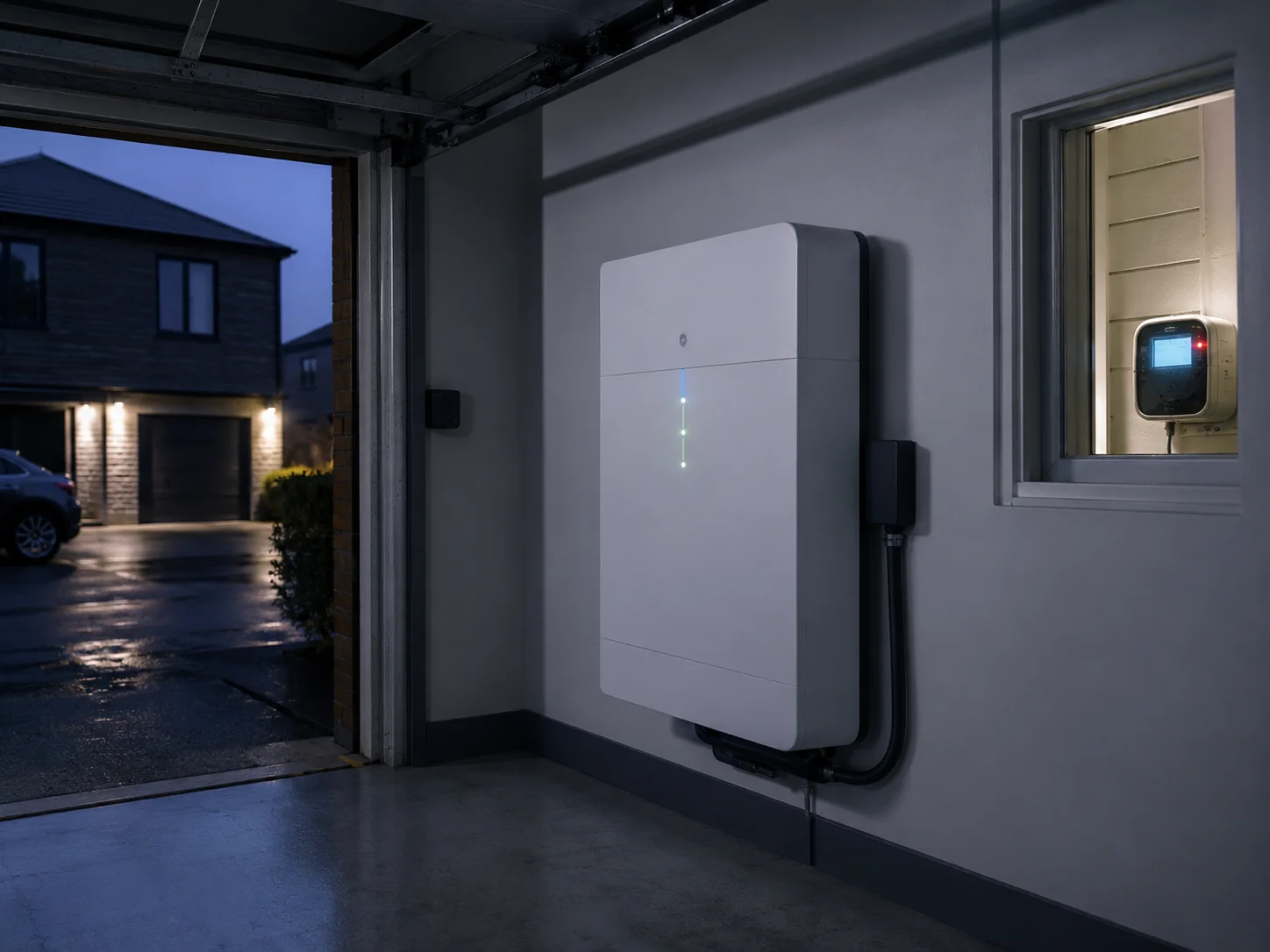
The average home battery stores 10 kilowatt-hours.
The average EV battery stores 60.
Yet right now, thousands of UK homeowners are spending £8,000–£12,000 on additional wall-mounted storage — while the largest battery they’ll ever own sits in their driveway, doing absolutely nothing, for 23 hours a day.
This is the most expensive mistake in home energy right now. And the industry is quietly encouraging it.
The problem nobody mentions when they sell you a bigger battery
Storage is only valuable when it’s used correctly, against the right tariff, at the right moment.
A large home battery with poor coordination can sit cycling pointlessly, earning nothing, saving less than its spec sheet promised. A smaller battery with real intelligence routinely outperforms it. The difference isn’t kilowatt-hours. It’s decisions.
Most households discover this the hard way — six months after installation, when the savings don’t match the projections and nobody can explain why.
The real question isn’t “how big should my battery be?” It’s “does my home know how to use the energy assets I already have?”
For most homes today, the honest answer is no.

The hidden asset sitting in your driveway
Reuters reported that electric vehicles spend up to 95% of their lives parked. Sit with that for a moment.
Your car — which cost £30,000 to £60,000 and contains a battery roughly six times larger than a typical home storage unit — sits idle almost all day, every day, while you pay peak electricity rates to run your house.
Vehicle-to-home (V2H) technology means that car battery can power your home directly. Vehicle-to-grid (V2G) means it can earn money by feeding surplus energy back to the wider grid during peak demand. Both are real, both are accelerating, and both are already available on a growing number of vehicles and chargers in the UK.
But here’s where almost every current solution fails.
When does the driver need the car tomorrow? How much charge must be guaranteed regardless of optimisation? What’s the real cost of cycling the EV battery one more time today? Should the home battery act first, and the EV only if necessary? And critically — is doing absolutely nothing actually the best decision right now?
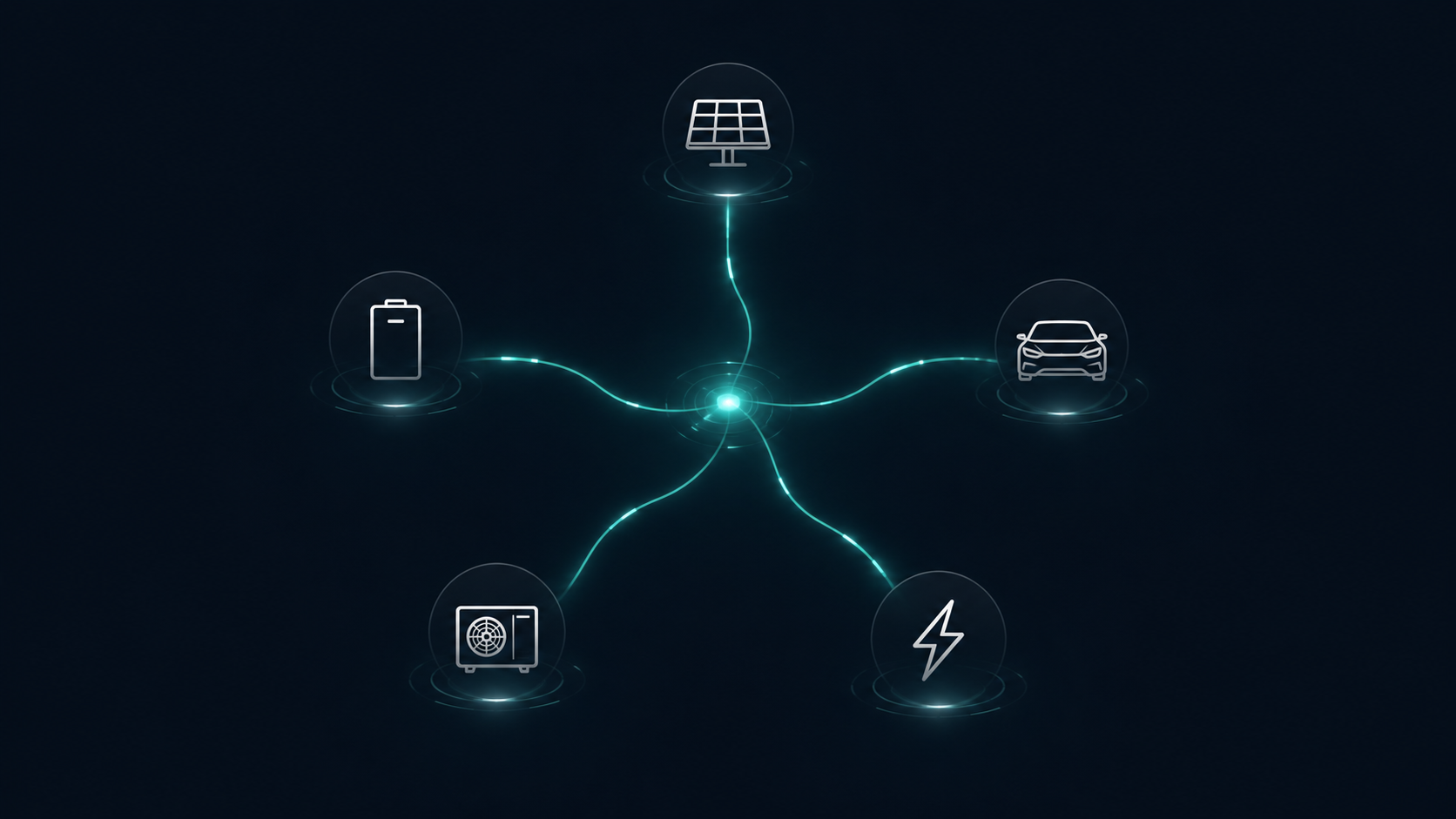
These are not questions a charger app can answer. They require a system that sees the full picture — solar generation, home battery state, EV charge level, heat pump demand, tariff pricing — and makes coordinated decisions automatically, every 30 minutes, without the homeowner touching a single setting.
That system doesn’t exist inside any one device. It has to sit above all of them.
Why the industry keeps selling you more hardware
The instinct when electricity bills rise is completely understandable. More storage means more resilience. Buy the 15 kWh battery instead of the 10 kWh. Add a second unit. Bigger is safer.
Hardware manufacturers understand this instinct very well. It’s why battery upsells are so common at the point of installation. It’s why the conversation almost always centres on capacity rather than coordination.
But battery sizing is not a hardware question. It’s an optimisation question.
The right battery size for your home depends on your evening electricity usage, your solar generation pattern, your import tariff, your export rate, your EV charging habits, your heat pump demand, your backup energy preference, your daily routine, and whether V2H or V2G is available to you.
Every one of those variables shifts across seasons, across tariff changes, across family routines. The “right” answer in January is different from the right answer in July. The right answer on Octopus Agile — where prices change every 30 minutes — is different from the right answer on a flat rate tariff.
No hardware purchase solves that. Only intelligence does.
What coordination actually looks like
Here’s what a properly coordinated home does on a smart tariff — automatically, in the background, without the homeowner making a single manual decision:
Electricity is nearly free on Octopus Agile. The system charges the EV to the level needed for tomorrow’s journeys. It tops up the home battery. It does both simultaneously if the economics justify it.
Prices are climbing toward the morning peak. The system stops drawing from the grid. It runs the house on what was stored overnight. The heat pump pre-heats before the expensive window opens.
Solar generation is at its peak. Rather than exporting surplus at a low rate, the system stores it in the home battery and — if there’s remaining capacity and the EV is home — in the car as well.
Peak pricing. The system draws from the home battery. It avoids charging the EV entirely. If V2H is available, the driver doesn’t need the car until 9am tomorrow, and the economics justify it, it takes a carefully calculated draw from the EV too.
The system looks ahead at tomorrow’s Agile prices, tomorrow’s weather forecast, tomorrow’s expected solar generation, and tomorrow’s scheduled journeys. It sets overnight charging accordingly.
None of that requires the homeowner to know what Agile prices are. None of it requires logging into an app. None of it requires a decision. It just happens — correctly, every day, across every device.
That’s the difference between a collection of smart devices and a genuinely intelligent home.
The future home doesn’t have one battery. It has a battery system.
Part of that system is mounted on the wall.
Part of it is inside the car.
Part of it flows from the solar panels on the roof.
Part of it is virtual — access to flexible tariffs, grid balancing markets, and eventually the full V2G export economy that’s already beginning to pay early adopters in the UK.
The value doesn’t come from owning more of any one component. It comes from the intelligence that coordinates all of them as a single system — one that knows the role each asset should play at each moment, and executes it without asking the homeowner to become an energy trader.
That’s where the market is going. Not more devices. Autonomous coordination.
Before your next hardware upgrade, ask yourself one question
Does my home know how to use the energy assets I already have?
If the answer is no — that’s where the real opportunity is. Not in the next battery on the wall. In the software layer that finally makes everything work together.
Fix it with Aveum
Aveum coordinates timing across your battery, EV charger, heat pump, and tariff signals so your home runs in the cheapest and highest-value windows.
Get early access