Last year, Britain paid over a billion pounds to waste clean energy.
Not a rounding error. Not a footnote. £1.46 billion — paid to wind farms to switch off, then paid to gas plants to switch back on. Both bills landed on your energy statement.
The wind was blowing. The turbines were spinning. The electricity existed.
We just didn't have homes smart enough to use it.
A record 10 terawatt hours of clean power went to waste in 2025 — enough to power every home in London for an entire year. And without urgent change, that figure could reach £8 billion annually by 2030.

Not because Britain failed to build enough clean energy. Because it built the energy and couldn't absorb it.
This is not an infrastructure crisis. It is a timing crisis. And the solution is already sitting in millions of UK driveways, on rooftops, and on garage walls.
The gap nobody talks about
The UK grid has a structural timing problem.
Demand peaks at 5pm — 36.5 gigawatts, everyone home, heating on, kettles boiling. Wind peaks overnight — when turbines spin hardest and the country is largely asleep. Solar peaks at midday — when most people are out.
The clean energy and the demand exist. They just keep missing each other.
Grid-scale batteries help. More transmission lines help. But both are slow, expensive, and address the supply side of a problem that has an equally important demand side.
Because right now, in homes across the UK, there are millions of EV batteries, home storage units and heat pumps representing gigawatt-hours of flexible demand. Devices that could absorb surplus overnight wind at near-zero cost. Devices that could shift their load away from the 5pm peak that forces gas plants online.
They're not doing any of that. Because nothing is telling them to.
Five smart devices. Zero coordination.
Think about what a typical energy-conscious UK household now owns.
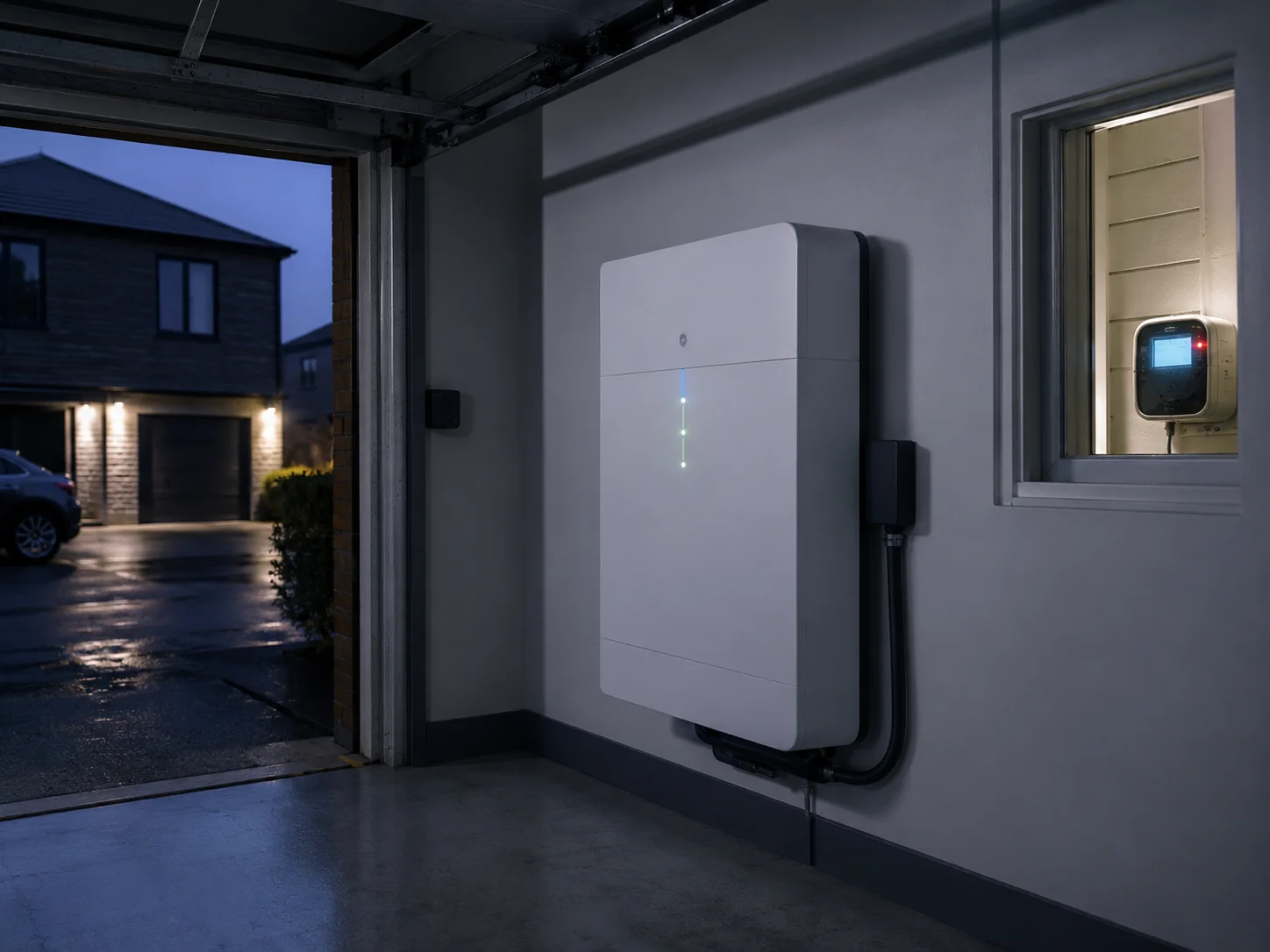
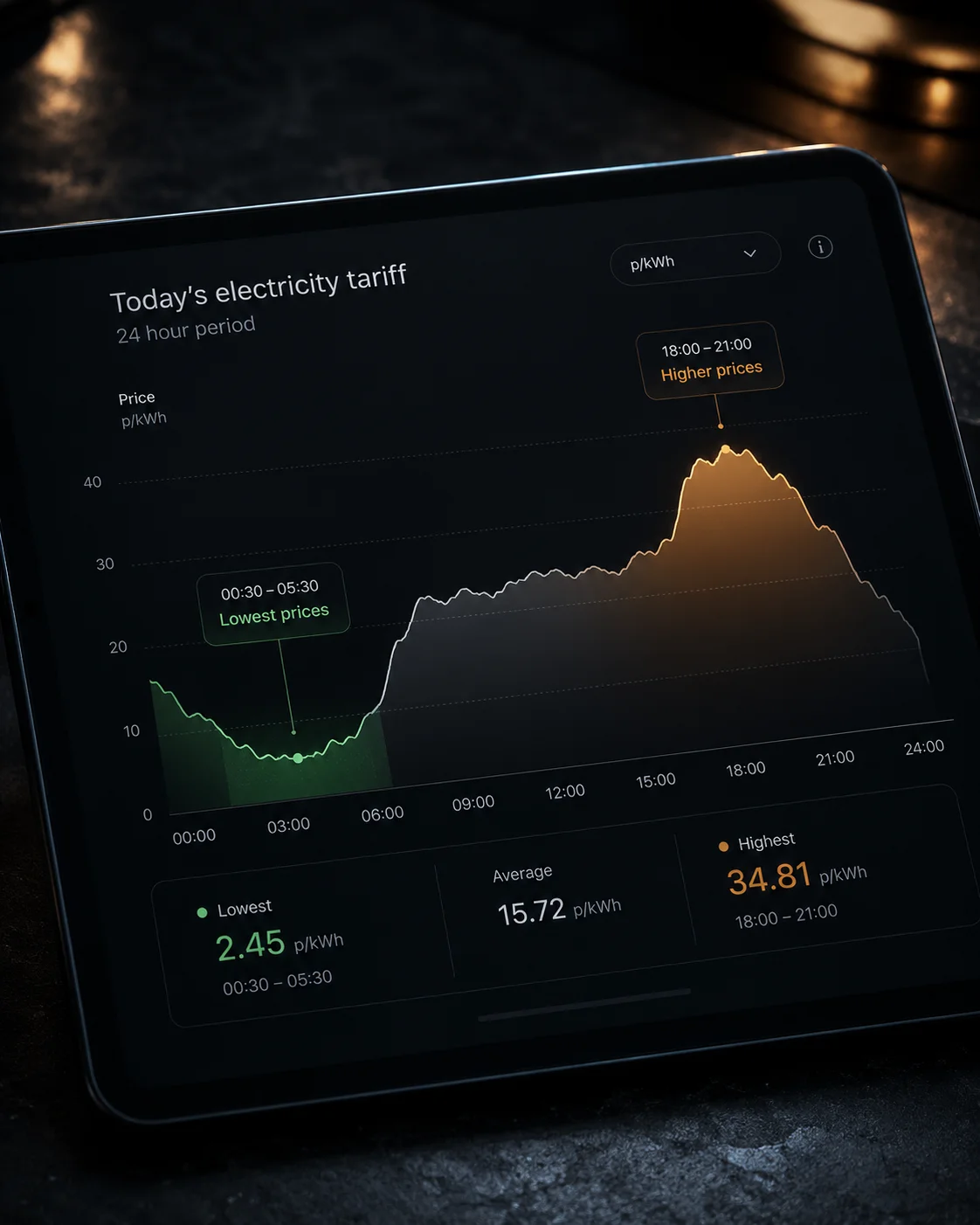
Solar panels on the roof. A home battery on the garage wall. An electric vehicle in the driveway — with a battery six times larger than the home storage unit. A heat pump running on a schedule set during installation two years ago. An Octopus Agile tariff where electricity costs change every 30 minutes.
Each device was a smart purchase. Together, they form one of the least coordinated systems imaginable.
The solar inverter follows its own logic. The home battery follows its own logic. The EV charger has its own app. The heat pump has a timer. The Agile tariff publishes half-hourly prices that exactly zero of those devices automatically read.
So what happens?
The EV charges when the owner gets home. That's 6pm — peak demand, maximum carbon, the single most expensive moment of the grid day. The home battery, which had all afternoon to absorb cheap solar, may already be full — so that surplus was exported at 4p/kWh instead. The heat pump ran its morning cycle with no knowledge that prices were about to spike.
The result is a home full of intelligent hardware making individually reasonable decisions that collectively produce the wrong outcome — every single day.

This is the coordination gap. It exists in hundreds of thousands of UK homes. And it is costing those homeowners hundreds of pounds a year while simultaneously making the grid's curtailment problem worse.
What a coordinated home actually does
The shift from uncoordinated to coordinated isn't incremental. It changes the entire relationship between the home and the grid.
Here is what Aveum does automatically, every day, without the homeowner touching a single setting:
Wind is abundant. Agile prices are near zero — sometimes negative. The system charges the EV to exactly the level needed for tomorrow's journeys. It tops up the home battery. The owner is asleep.
Prices are climbing. The system stops drawing from the grid. The house runs on what was stored overnight. The heat pump pre-heats before the expensive window opens.
Solar is peaking. Rather than exporting surplus at 4p/kWh, the system stores it. If the EV is home and has capacity, it absorbs the excess too.
Peak pricing. The system draws from storage. The EV doesn't charge. Grid exposure is minimised at the most expensive, most carbon-intensive moment of the day.
The system reads tomorrow's Agile prices, tomorrow's solar forecast, tomorrow's weather, and tomorrow's planned journeys. It sets overnight charging accordingly. The owner doesn't know any of this happened.
That last part matters as much as the savings.
Every EV that charges at 2am instead of 6pm is one fewer hour of gas generation. Every home battery absorbing overnight wind instead of sitting idle is one fewer megawatt of clean energy wasted. Coordinated homes don't just save money — at scale, they are a decarbonisation infrastructure. One that requires no planning permission, no government subsidy, and no behaviour change from the people who own them.
A million coordinated homes shifting EV charging from 6pm to 2am removes gigawatts of peak demand and absorbs gigawatt-hours of surplus wind. Not through new hardware. Through better decisions made by software that already exists.
The layer that's been missing
The energy industry spent a decade building the hardware of a clean energy system. Solar. Batteries. EV chargers. Heat pumps. Smart tariffs. The components are real, they work, and they are in homes across the UK right now.
What hasn't been built is the intelligence that sits above all of them.
Not an app that shows you data. Not a charger you can schedule manually. Not a thermostat with a timer. A coordination engine that reads every device, reads the tariff, reads the live carbon intensity of the grid, and makes the right decision for every home — automatically, every 30 minutes, every day.
Britain paid £1.46 billion last year because homes couldn't respond to the grid at the right moment.
The hardware to fix that is already installed. The clean energy already exists. The only thing missing is the software layer intelligent enough to connect them.
That is what Aveum is.
Aveum is open for early access at getaveum.com. Connect your devices once. Set your preferences. Your home handles the rest.
Sources: Montel Analytics Curtailment Report 2025 · Electricity Maps GB Grid Review 2025 · Hoare Lea UK Grid Carbon Emissions Analysis 2026 · Octopus Energy Wasted Wind Tracker
Fix it with Aveum
Aveum coordinates timing across your battery, EV charger, heat pump, and tariff signals so your home runs in the cheapest and highest-value windows.
Get early access